
By Calvin House | Published May 14, 2011 | Posted in Uncategorized | Comments Off on Employers Need Not Ensure Employees Take Meal Periods
Search Site
Recent Blog Posts
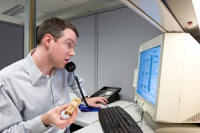
Employers Need Not Ensure Employees Take Meal Periods
California Labor Code section 512 bars employers from having an employee work more than five hours without providing the employee with a meal period of not less than 30 minutes. The wage orders promulgated by the Industrial Welfare Commission mimic that provision. See, for example, IWC Order No. 5, page 7, section 11. For years, controversy has raged Read More
Read More
Lack Of Security Clearance Does Not Justify Discrimination
The Ninth Circuit has ruled that lack of a security clearance cannot be used as a shield for discrimination. The usual McDonnell Douglas burden shifting approach applies. In Zeinali v. Raytheon Co., No. 09-56283 (9th Cir. Apr. 4, 2011), Hossein Zeinali, who was of Iranian descent, worked as an engineer for Raytheon for four years. Raytheon had told Read More
Read More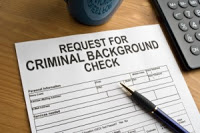
Use of Criminal Background Checks May Violate Discrimination Laws
In an effort to avoid hiring problem employees, employers frequently include criminal background checks as part of the application process. Employers who rely on such information must be careful to avoid practices that might subject them to discrimination lawsuits. The anti-discrimination laws prohibit employment practices that have an unjustified disparate impact on a protected group, Read More
Read More
GPH Employment Law Blog: Use of Criminal Background Checks May Violate Discrimination Laws
Two Metson Marine employees worked 14-day hitches on Metson’s ships providing emergency clean up of oils spills and other environmentally hazardous discharges off the California coast. During their hitches, the employees were required to sleep on the ships. Metson allotted 12 hours out of the day to work, and 12 hours to off-duty (three hours Read More
Read More
Workplace Bullying
Workplace bullying got some national attention recently when a committee of the Maryland legislature held a hearing on Senate Bill 600, a version of the Healthy Workplace Bill, authored by Prof. David Yamada of Suffolk University Law School. According to the bill’s website, it has been introduced in 20 states, and is actively under consideration in 13. Read More
Read More
The Employee-Facebook Privilege
American Medical Response of Connecticut earned notoriety when the NLRB charged it with an unfair labor practice for having fired an employee who posted negative remarks about her supervisor on her personal Facebook page in October 2010. She had posted the remarks after being denied union representation for an interaction with her supervisor. The posting drew supportive Read More
Read More
Staub v. Proctor Hospital And Motivating Factor
The Supreme Court’s recent decision in Staub v. Proctor Hospital, Case No. 09-400 (Mar. 1, 2011) discusses the standards for proof of motive in a claim for discrimination based on military obligations. This prompts consideration of the role of motive in all sorts of employment cases. In Staub, two low level supervisors were hostile to the military Read More
Read More
Arbitration Of Unpaid Wage Claims
Many employers prefer arbitration to lawsuits and administrative hearings. Although the law permits employers to require arbitration of employment disputes, California courts have imposed some restrictions. See, for example, Armendariz v. Foundation Health Psychcare Services, Inc., 4 Cal.4th 83, 6 P.3d 669, 99 Cal.Rptr.2d 745 (2000) (requiring an arbitration agreement to include certain procedural protections for employment Read More
Read More
Meal Or Rest Period Violation Premium
As a general rule, California employers must allow their employees two 10-minute rest periods and a 30-minute meal period during a regular work day. If the employer does not do so, under Labor Code section 226.7, it “shall pay the employee one additional hour of pay at the employee’s regular rate of compensation for each work Read More
Read More
Explicit Mutual Wage Agreements in California
A recent appellate decision explains how California employers may implement an explicit mutual wage agreement that provides for payment of a weekly salary to cover both regular hours and overtime hours. The decision in Arechiga v. Dolores Press, Inc., Case No. B218171 (Cal. Ct. App. 2/7/2011) is available here. California law requires employers to pay overtime to Read More
Read More